
Hiring Guides
By John Kubin, Co-founder, Spexster and Taylor Andrew, Partner & Head of Project Services, Spexster
Cinematographer vs Videographer: Which Does Your Project Need?
A cinematographer (director of photography, or DP) designs the look of a film and leads a camera and lighting crew; a videographer typically shoots alone, often handles sound and editing too, and is the right hire for events, interviews and social content. Decide by the crew your project needs and the visual control you want, not the word in someone's bio.
Two titles, one brief, and a decision nobody explains
A brand has a brief for a two-minute film about its new product. One freelancer calls themselves a cinematographer and quotes a crew of five and two prep days. Another calls themselves a videographer and quotes one person for one day, edit included. The quotes are four times apart. Nobody on the marketing team has a way to tell which one is right, so the decision gets made on price, or on whichever reel had the nicer drone shot.
Both can go wrong. Hire the solo videographer for a talent-led brand film and you get a very good event video. Hire the DP and crew to cover a conference and you pay for departments you did not need and get footage with no edit. The titles overlap, people use them loosely, and the thing you are actually choosing between is a working method. This guide explains what each role does on set, which jobs call for which, how the choice reshapes the budget, and how to read a reel for the answer. If you would rather have a producer tell you from the brief, that is the last section.
Where the two titles come from
Cinematography is the older craft, and the film industry has treated it as an authored art for almost a century. At the first Academy Awards, the cinematography prize went to Charles Rosher and Karl Struss for Sunrise. Tools were built around the role: Garrett Brown's Steadicam, introduced in 1975, was first used in production on Bound for Glory in 1976.
Videography grew up on a different track. As Wikipedia's entry puts it, videographers "generally handle smaller, event-scale productions like commercials, documentaries, legal depositions, live events, short films, training videos, and weddings, as opposed to being part of large production teams." The split used to be about equipment, film on one side and tape on the other. Digital cinema cameras erased that line. What remains is a difference in working method, and that is what you are really choosing between.
What each role actually does on set
The daily reality is very different.
### The cinematographer, or DP
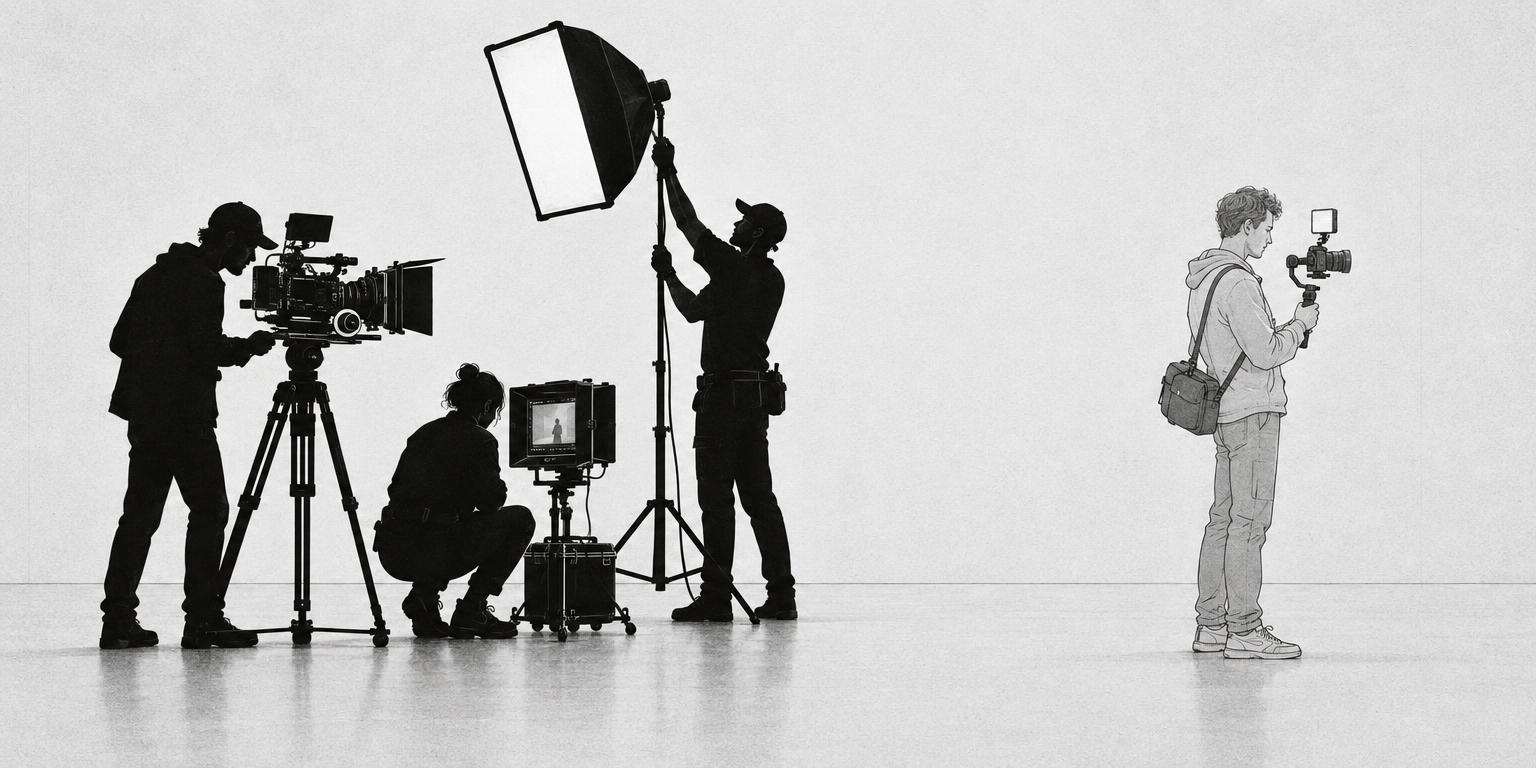
The DP is the head of the camera and lighting departments. The work starts long before the shoot: reading the treatment, walking the location with the director, choosing a camera and lens package, drawing up a lighting plan with the gaffer. On the day, the director says what a scene needs to feel like, and the DP translates that into camera position, movement, lens and light.
On a full crew the DP rarely touches the camera during a take. A camera operator runs it. A first assistant camera pulls focus. The gaffer and electricians build the lighting the DP designed, and the key grip's team rigs stands, flags and dollies. The DP watches the monitor, makes decisions and keeps things moving so the director can concentrate on performance, and stays involved through the colour grade, because the look is not finished until the grade is.
### The videographer
A videographer is usually the whole camera department. On a corporate interview day, they arrive with a camera, a small light kit, a wireless microphone and a tripod, run sound, shoot the interview and the b-roll, then edit it. Wikipedia's entry describes the same thing: on smaller productions "a videographer often works alone with a single-camera setup" and the role covers camera, sound and editing.
That breadth is the point. A good videographer is fast, self-sufficient and comfortable deciding on the fly without a director beside them. What they cannot do is be in three places at once, so the look is bounded by what one person can light and operate.
Which projects call for which
The honest rule: hire a DP when the image is the product, and hire a videographer when coverage and turnaround are the product.
Hire a cinematographer and a crew for:
- Broadcast and high-end commercial spots, where client, agency and director all sign off on every frame.
- Narrative work with actors, blocking and dialogue.
- Brand films that need a distinct look: talent, wardrobe, art direction and lighting working together.
- Anything with complex camera movement or a location that has to be lit from scratch.
When Spexster crewed the Alo Yoga shoot in Hamburg with Rosie Huntington-Whiteley, the local crew, Windstärke 10, worked as a full team under a DP, with camera, lighting and grip departments, because a talent-led shoot is judged on the image above all. The Alo Yoga case study shows how that came together.
Hire a videographer for:
- Events, conferences and launches, where nothing repeats.
- Corporate interviews, testimonials and internal communications.
- Social-first content shot and cut in volume.
- Small product shoots and simple tabletop work.
- Documentary coverage where a large crew would change how people behave.
DIVE Billboards is the second category. DIVE, an out-of-home media company, needed footage of billboard placements across 13 countries and more than 45 cities, most of it turned around in about two weeks from brief to footage. That is work for a local videographer who can get to the site and deliver clean material fast, not for a multi-department crew. The DIVE Billboards case study walks through it.
How the choice changes your budget, timeline and deliverables
The cost difference is not really one person's rate versus another's. It is the structure of the production around them, which is why the two quotes in the opening were four times apart and both were honest.
Crew size. A DP implies a crew: at minimum a camera assistant and a gaffer, and on most commercial jobs an operator and a grip as well. A videographer implies one person, occasionally two. Every additional department is another day rate, another vehicle and another lunch.
Gear. A DP specifies a package: cinema camera, lens set, monitors, wireless video, lighting and grip, much of it rented per day and moved in a van. A videographer usually owns their kit and arrives with it. No rental line, no truck.
Prep days. A DP's value shows up before the shoot. Scouts, camera tests, a lighting diagram and a shot list with the director are working days, and they are what make the shoot day efficient. A videographer's prep is typically a call, a brief and a look at the venue on the morning.
Timeline. A crewed shoot is a schedule: prep, shoot, wrap, edit, grade. A videographer's job often runs brief to delivered edit in days, because one person holds the whole thing.
Deliverables. A DP delivers camera-original footage to a post team; the edit and grade are separate hires. A videographer usually hands over finished cuts sized for your platforms. If you have no editor lined up, that alone may decide the hire, or you can find a video editor when you book the DP.
How to tell from a reel
Titles are self-assigned. The reel is where you find out what you are buying.
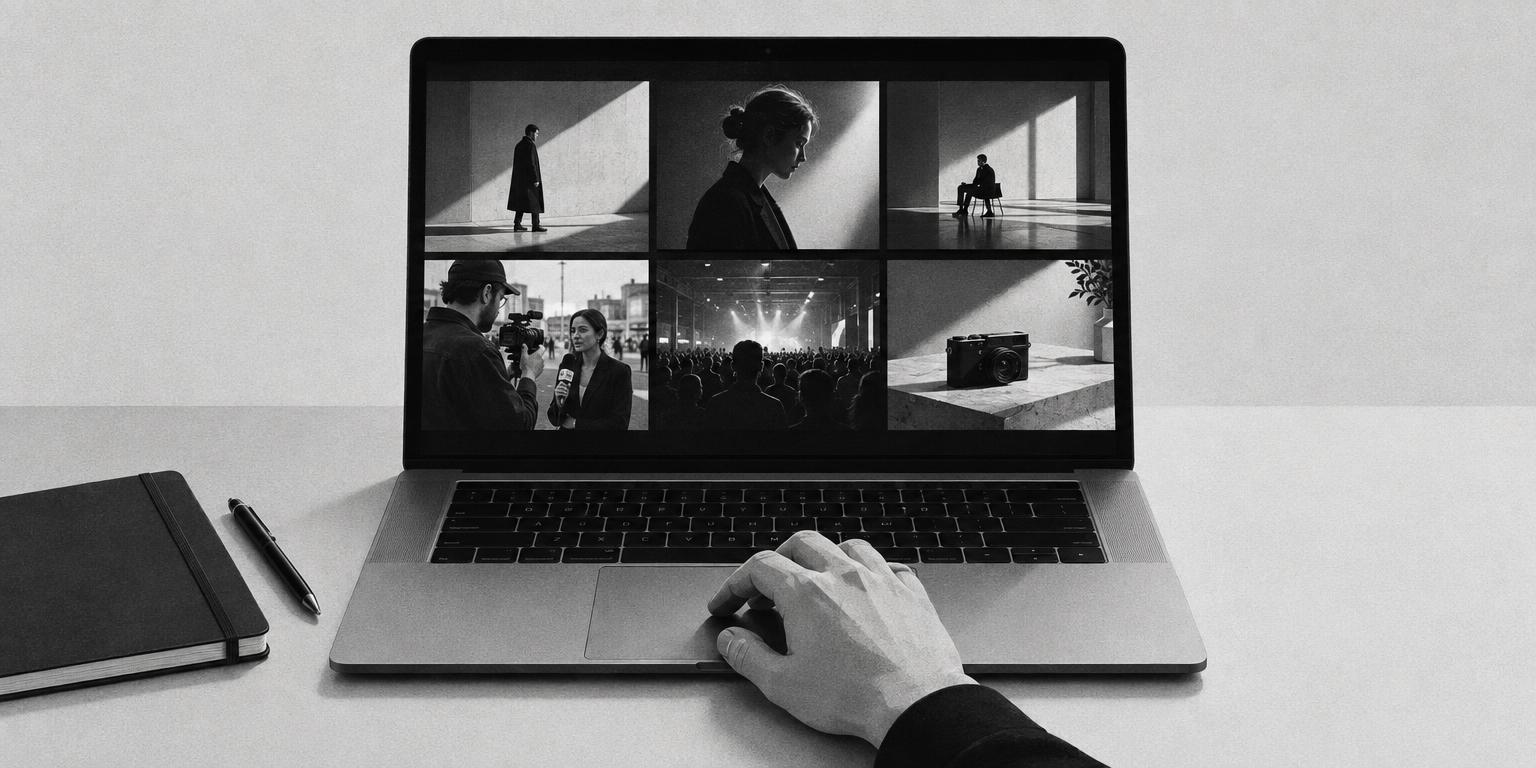
A cinematographer's reel is built around controlled images. Look for consistent, deliberate lighting across a whole sequence, not one pretty shot; camera movement that feels planned; scenes with actors and blocking; and a range of looks between projects, which shows the DP serves different directors rather than repeating one style. Credits will usually read "Director of Photography" against recognisable brands or production companies.
A videographer's reel is built around coverage and completeness: events, interviews, launches and montages, often with the videographer's own edit and graphics. Check exposure, focus and framing under uncontrolled conditions, whether interviews are lit and recorded cleanly, and whether the cut moves.
Two checks apply to both. Ask which shots they actually lit and operated, since reels can include work where the person was one of several crew. And ask for a full-length piece: a 30-second reel can hide a lot; a finished three-minute film cannot.
The overlap, and the honest caveat
Plenty of professionals do both. A DP who shoots documentaries will happily run a camera solo. A videographer who has grown into commercial work will own a cinema camera and know how to lead a gaffer. Some use "cinematographer" because it sounds better on a website; some say videographer out of modesty.
So do not get hung up on the label. Describe the project, the crew you expect, the deliverables and the timeline, and ask which mode they would work in. The right professional will tell you plainly, and will often suggest a smaller or larger setup than you had in mind.
How Spexster fits
On Spexster the two are separate roles and pages, cinematographers and videographers, because the shape of the hire is different, and many professionals appear under both, because the distinction is the job, not the person. Both pages break down by city, so a brand shooting on the West Coast can go straight to cinematographers in Los Angeles. Every professional is reviewed before appearing, with no paid placement.
If you have read this far and still are not sure which you need, that is normal, and it is the easiest question a producer answers. Send a brief: a White Glove project manager scopes the crew from the deliverable, tells you whether it is a one-person job or a five-person one, sources it, and handles contracts, scheduling, logistics and escrow payment through Stripe at no additional fee. Alo Yoga's Hamburg shoot is the full-crew end of that range; a DIVE Billboards site visit is the other.