
Hiring Guides
By Taylor Andrew, Partner & Head of Project Services, Spexster
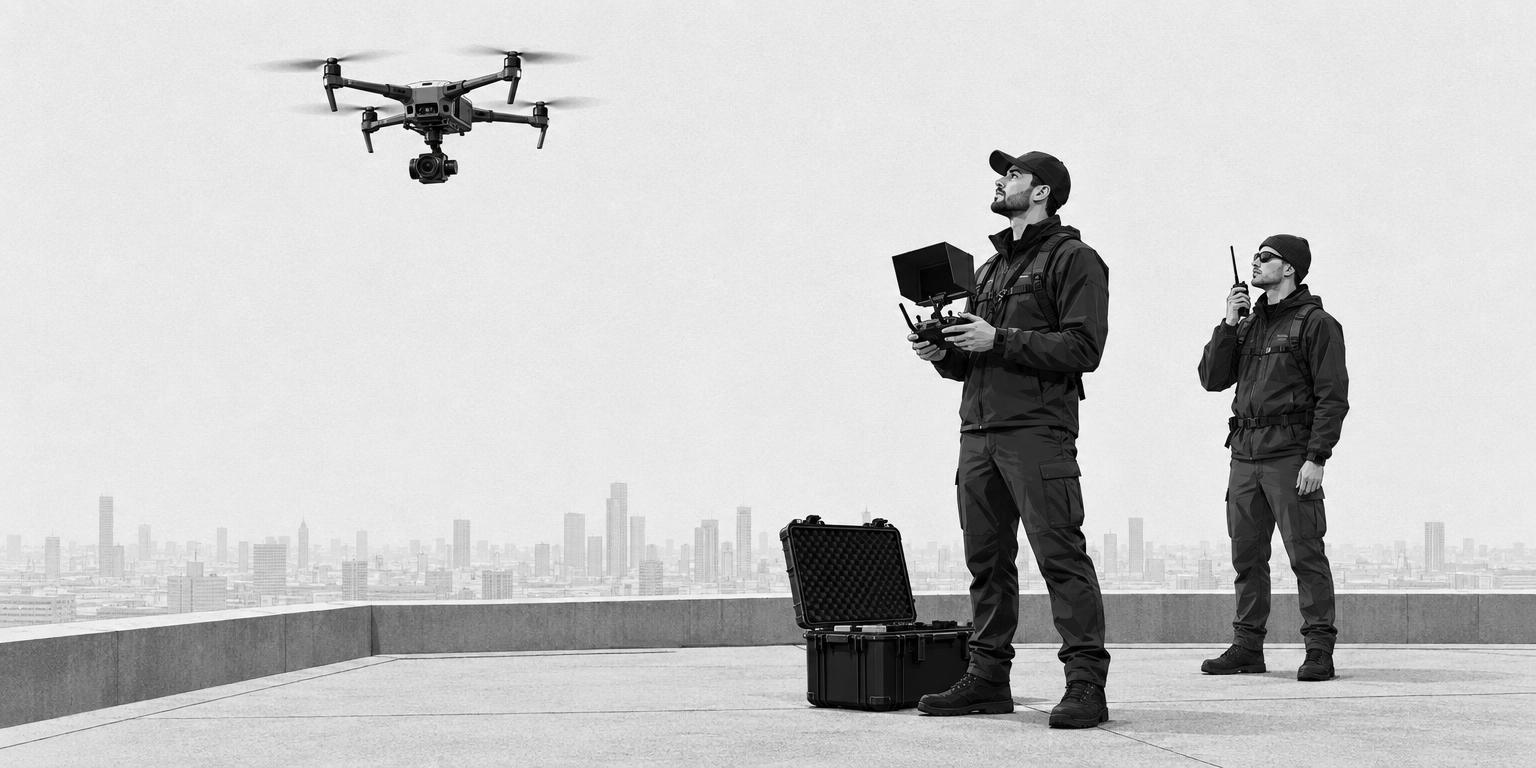
How to Hire a Drone Operator: Licensing, Insurance and What to Ask
Before you talk about creative, confirm three things: the pilot's commercial certificate for the country (FAA Part 107, a Transport Canada pilot certificate, or a CAA Flyer ID and Operator ID), the aircraft's registration, and a certificate of insurance. Then ask for an airspace plan for your exact location, because the certificate alone does not clear a flight near an airport or over city property.
The reel is spectacular. Was the flight legal?
Aerial footage is the easiest video to fall for and the easiest to hire badly. The reel opens on a sunset over a coastline, swoops across a rooftop, and the brand says yes before anyone asks a question. Then the shoot is a Tuesday in a city centre, three miles from an airport, taking off from a car park the pilot does not have permission to use, with no insurance that covers the aircraft. If anything goes wrong, part of the liability sits with the business that commissioned the flight.
A hobbyist can cut a convincing reel. A commercial flight is regulated in all three markets Spexster serves, and the rules are specific enough that you can check them in ten minutes. This guide tells you what to check, what sits on top of the licence for a city shoot, and how to read an aerial reel for skill rather than scenery. If you would rather someone else ran the paperwork, the last section is for you.
What a legal commercial drone flight requires in the US, Canada and UK
All three markets want a pilot certificate, an aircraft registration and a set of operating limits; the names and thresholds differ.
### United States: FAA Part 107
The pilot must hold a Remote Pilot Certificate, which the FAA says requires being at least 16, passing an aeronautical knowledge test and clearing TSA screening. Under Part 107 the aircraft must weigh less than 55 pounds at takeoff, fly at or below 400 feet, stay at or under 100 mph and remain within the pilot's visual line of sight. Every drone flown under Part 107 must be registered, whatever its weight ($5 per drone for three years), and marked, and since September 16, 2023 any registered drone must also broadcast Remote ID.
Controlled airspace, which surrounds every major airport, needs an authorisation; the FAA's LAANC system lets Part 107 pilots request it through approved apps, with approvals arriving in near-real time.
### Canada: Transport Canada pilot certificates
Transport Canada calls drones from 250 g to 25 kg "small drones": they must be registered and marked, and the pilot must carry a valid drone pilot certificate while flying. Drones under 250 g are exempt from both.
The certificate comes in tiers; the two that matter for a brand shoot are Basic and Advanced (Transport Canada also issues a Level 1 Complex Operations certificate for beyond-visual-line-of-sight work). A Basic certificate (minimum age 14) does not allow flight in controlled airspace or close to or over people. An Advanced certificate (minimum age 16) requires an online exam and a flight review, and permits controlled airspace with air traffic control permission and flight closer to or over people when the aircraft meets the safety-feature requirements. For a city shoot near buildings, pedestrians or an airport, ask for Advanced.
### United Kingdom: CAA Flyer ID and Operator ID
The CAA separates the person from the aircraft. The Flyer ID belongs to the pilot: it requires passing the CAA's online theory test, is free and is valid for five years. The Operator ID belongs to whoever is responsible for the aircraft, requires the holder to be 18 or over, costs £12.34 and is renewed annually; the CAA is explicit that it "does not give you authorisation to fly."
Most low-risk commercial work sits in the Open category, whose subcategories set how close a drone can get to people: A1 covers aircraft under 250 g flying over (but not over crowds of) uninvolved people; A2 allows unclassed aircraft under 2 kg no closer than 50 m to people (30 m for UK2/C2-class aircraft under 4 kg) and requires an A2 Certificate of Competency; A3 allows aircraft under 25 kg but no closer than 50 m to people and not within 150 m of residential, commercial, industrial or recreational areas. Riskier work falls into the Specific category and needs an operational authorisation. For a London street shoot, expect at least an A2 CofC.
Why a city shoot usually needs more than the certificate
The certificate proves the pilot can fly legally somewhere, not at your location on your date. Three things sit on top of it.
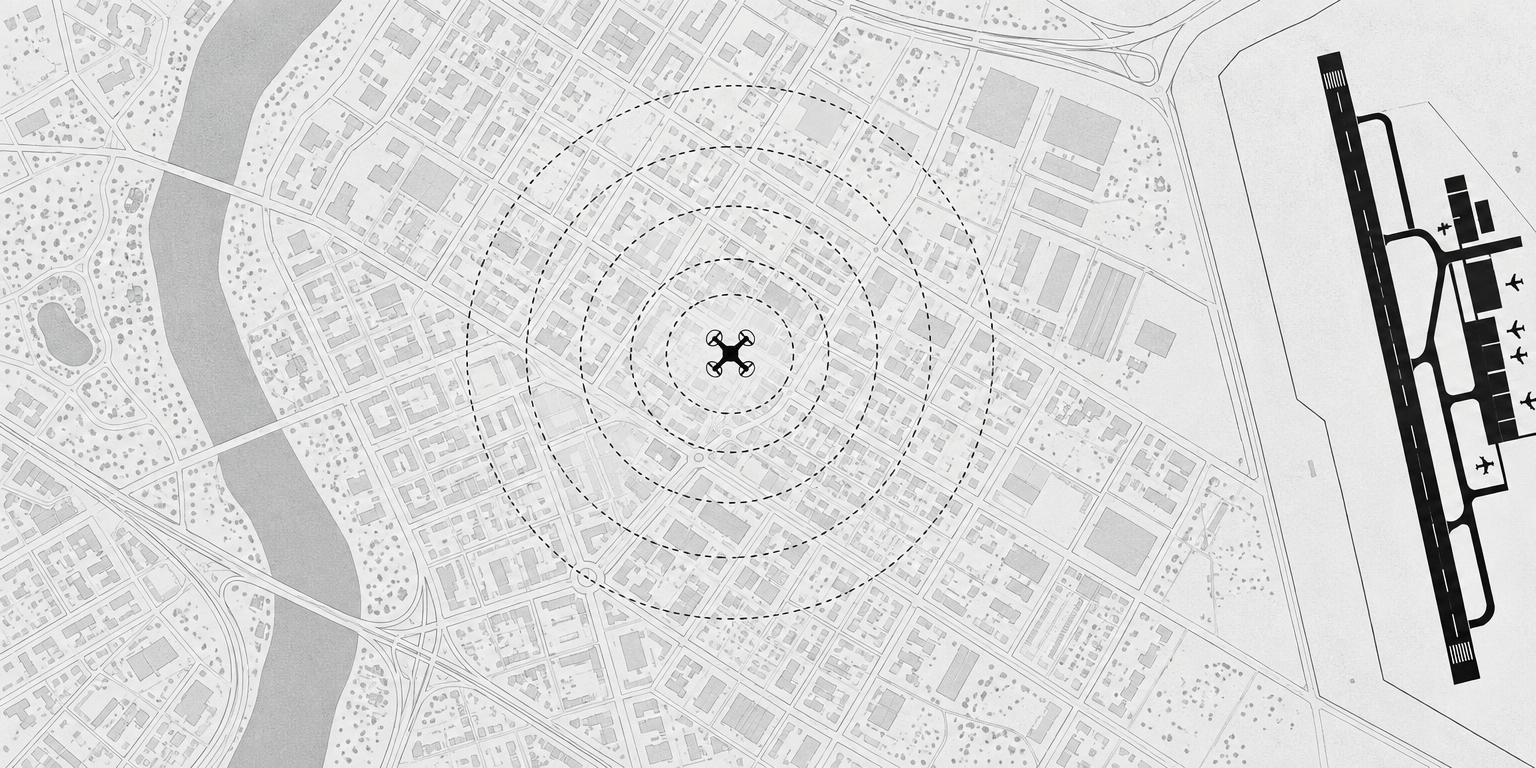
Airspace. Big cities have big airports, and the controlled airspace around them covers many of the neighbourhoods brands want to shoot. In the US that means a LAANC authorisation; in Canada an Advanced certificate plus air traffic control permission; in the UK permission for airport flight restriction zones. An operator who cannot show you an airspace map with your address on it has not planned the flight.
Film permits. Toronto's film office states that "drone operations are regulated by Transport Canada," and its Grid permit for roving b-roll and stand-ups does not cover them: "If you require set dressing, drone footage, or an on-street location to rig picture vehicles, please apply for a location permit." Adding drone work to an existing Toronto permit needs two full business days' notice to the Film Office. Vancouver goes further: for any drone use while filming, the city says "you will be required to get an aviation liability insurance in addition to the general liability insurance for filming," and it may restrict flight paths over parks during bird nesting season.
Property. Taking off or landing on city land or a rooftop needs the owner's sign-off separately from airspace clearance; Toronto asks productions to submit copies of their federal approvals to their Film Permit Coordinator for take-off or landing on City property.
This is the layer that a pilot who flies your city every week handles without thinking, and a pilot flown in from elsewhere does not. It is also the kind of paperwork a White Glove project manager coordinates with you, before anyone is standing in a car park wondering.
Insurance and what a certificate of insurance is
General liability covers people and property on the ground. Aviation liability, sometimes called drone or UAS liability, covers what the aircraft does in the air and when it falls. Vancouver requires both for filming.
A certificate of insurance (COI) is the one-page document an insurer or broker issues to prove a policy is in force: the insured's name, policy type and limits, effective dates and, where requested, an "additional insured" line naming your company or the city. Toronto, for example, requires a certificate naming the City of Toronto as an additional insured before a permit is issued. Ask for the COI before the shoot and check that the dates and the aircraft are covered.
The questions to ask before you book
Ask these in writing. A professional will have the answers ready; a hobbyist will go quiet.
- Certificate number and type. Part 107 number in the US; Basic or Advanced in Canada; Flyer ID, Operator ID and any A2 CofC or operational authorisation in the UK.
- Aircraft registration, and in the US how Remote ID is met.
- Airspace plan for your location. Is the site in controlled airspace, what authorisation is needed and when will it be requested?
- Permits. Who pulls the film permit, does it name drone work, and who approved the takeoff and landing points?
- Insurance. General and aviation liability limits, plus a COI with your company as additional insured if required.
- Backup aircraft and batteries. One hard landing should not end the day.
- Weather plan. Wind and rain thresholds, and what happens to the fee if the flight is scrubbed.
- Deliverables. Resolution, frame rate, codec, colour profile (log or standard), and whether stills come as RAW.
- Footage ownership. Who owns the raw files, who can reuse them, and whether the operator may post the work on their reel.
How to read an aerial reel
Reels reward drama, so look past the sunset over the coastline and judge the flying. Watch for smooth, deliberate moves: a slow reveal over a rooftop edge, an orbit that keeps its subject centred, a tracking shot that stays level with a car. Jitter, wobble at the end of a move or a tilting horizon mean a cheap gimbal or a rough pilot. Low-altitude work near buildings and people is where skill and licensing both show; high, wide, empty shots are the easiest to fly. Finally, ask which shots were flown under an authorisation. The answer tells you how much of the reel was legal commercial work.
Hiring by city
Because the licence, the airspace and the permit all depend on where you are flying, the simplest route is to hire locally: a pilot who flies a city every week knows where the airport authorisation boundary runs and which permit office wants which form. Spexster's Crew Map lets you browse vetted drone operators by location, with a page for each city, such as drone operators in Los Angeles, where FilmLA permits and airport airspace are a daily reality. Tourism agency Madden Media hired videographers, photographers and crew across four US locations on one-to-four-week lead times the same way; the Madden Media story shows how local hiring keeps a multi-city project moving.
How Spexster fits
You can check all of this yourself, and now you know what to check. What Spexster changes is that someone else has already done it, and keeps doing it.
Post the job with the location and the shots you need, and vetted drone operators apply; every operator on the platform has been reviewed before appearing, with no paid placement. Or send a brief, and White Glove helps with the part of aerial work that is paperwork: a dedicated project manager coordinates the certificate, insurance and city permit questions with you, and payment is held in escrow (powered by Stripe) until the footage is delivered, at no additional fee. Where a city has fewer than four verified operators, we source a licensed pilot for the market. Start with drone operators for hire.
Frequently asked questions
Sources
- FAA: Commercial Operators (Part 107)
- FAA: Part 107 Getting Started
- FAA: How to Register Your Drone
- FAA: Remote ID
- FAA: LAANC
- Transport Canada: Drone operation categories and pilot certificates
- Transport Canada: Flying your drone safely and legally
- Transport Canada: Getting a drone pilot certificate
- UK CAA: Rules and categories of drone flying
- UK CAA: Get a Flyer ID
- UK CAA: Get an Operator ID
- UK CAA: Introduction to more advanced flying (A1, A2, A3)
- City of Toronto: Plan Your Shoot
- City of Toronto: Guidelines for Filming in Toronto
- City of Vancouver: Film and photography permits
- City of Vancouver: Insurance requirements for filming, events and facility use