
Industry Trends
By Jed Williams, Co-founder, Spexster
Video Production Trends for 2026: What Brands and Crews Need to Know
The trends that matter most in late 2026 and into 2027: vertical and short-form as the default deliverable, more videos on flat budgets, creator-style content, local crews instead of flown-in ones, generative AI with disclosure rules attached, remote review through a live video village, virtual production for specific jobs, and captions as standard. For brands they change the brief and the hire; for crews, what a reel needs to show.
Most trend pieces are forecasts. This one is a checklist.
If you commission video for a brand, you do not need to be told that short vertical video matters or that AI is everywhere. You have a brief due. What you need is to know which of these shifts change what you write in that brief and who you hire against it, and which you can safely ignore for this project.
So that is how this piece is built. Eight trends, each with the evidence, and then two lines: what it changes if you are hiring, and what it changes if you are the crew. Several of them point the same way, toward more content, shot locally, by people you did not fly in, and the last section is about what to do with that.
The trends at a glance
| Trend | What changes for brands hiring | What changes for crews | |---|---|---| | Vertical and short-form first | Brief every aspect ratio up front | Frame for 9:16 and 16:9 on the same day | | More videos, flat budgets | Plan one shoot for many outputs | Shooter-editors who deliver cutdowns win work | | Creator-style content | Hire for natural, unpolished feel where it fits | Show real, unscripted work on your reel | | Local crews over flying crews | Hire where the shoot is | Your location is a selling point | | Generative AI, with limits | Agree AI use and disclosure in writing | Know the tools and the consent rules | | Remote review and video village | Approve on the day, from anywhere | Expect a live feed and a client watching it | | Virtual production | Use it for the right scenes, not by default | LED stage experience is a niche skill | | Captions and accessibility | Budget captions as a deliverable | Deliver caption files and clean dialogue |
Vertical and short-form video is now the default deliverable
HubSpot's 2026 State of Marketing report found short-form video (49%) was the top ROI-driving content format, ahead of long-form video (29%) and live streaming (25%). Wyzowl's 2026 survey found 63% of people would most like to watch a short video to learn about a product or service, and 71% of marketers said videos between 30 seconds and two minutes are the most effective. The platforms back it up: YouTube CEO Neal Mohan said in June 2025 that Shorts were averaging over 200 billion daily views.
For brands hiring: put every aspect ratio and run time in the brief before anyone quotes. A shoot planned only for 16:9 and cropped later loses the top and bottom of every frame.
For crews: a reel that shows only widescreen work reads as out of date to social-first buyers. Include vertical pieces, and protect both frames on set with safe-area guides.
More videos on budgets that are not growing
Wistia's 2026 State of Video report found companies are making more videos, but fewer plan to increase spend and almost half are keeping budgets flat. Both in-house and outsourced production rose year over year, with outsourced production up 7%. Wyzowl's data shows the mix: 59% of businesses create video themselves, 10% use external vendors only and 32% do both.
For brands hiring: get more from each shoot day. One well-planned day can produce a hero film, short cutdowns, stills and interview pull-quotes if the shot list is built for it.
For crews: shooter-editors who can turn a day into a set of usable assets are in demand. Our guide to hiring a freelance video editor shows what buyers look for on that side.
Creator-style and authentic content
A lot of social budget now goes to content that looks made by a person, not a production: handheld, talking to camera, real locations. HubSpot's 2026 report lists user-generated content among the formats marketers plan to invest in.
For brands hiring: "authentic" still needs a professional. Clean audio, good light and a crew that keeps the footprint small are what stop creator-style content from looking careless. A creator with an audience and a crew that shoots in that style are different hires.
For crews: small kit, fast setups and the ability to direct non-actors are selling points. Show unscripted work alongside the polished pieces.
Local crews instead of flying crews
Flying a team to every location is expensive, slow and the biggest source of a shoot's footprint. AdGreen's annual review of 2024 advertising production data found people transport accounted for 71.8% of emissions on the productions it measured, the largest contributor in every year it has tracked.
For brands hiring: for one-to-three-day shoots, hire crew local to the location and brief everyone against one shot list so the footage cuts together. Madden Media, a tourism marketing agency, needed videographers, photographers and crew in four US locations on one-to-four-week lead times and hired them through Spexster. The city pages for filming in Los Angeles, New York City and London cover permits and studios.
For crews: knowing the local venues, permit offices and rental houses is a real advantage.
Generative AI in pre- and post-production, and its limits
AI is now part of most marketing teams' workflow, though surveys measure it differently. HubSpot's 2026 report says nearly 75% of marketers use AI for media creation, including video and images. Wyzowl found 63% of video marketers have used AI video tools to create or edit marketing videos. Wistia found more than a third already use AI in their video workflow. The steady uses are scripts, storyboards, transcription, rough cuts, cleanup and captions.
The limits are now written down. Under the EU AI Act, Article 50(4) requires disclosure of AI-generated or manipulated "deep fake" image, audio or video content from August 2, 2026; the Digital Omnibus left that date unchanged and gave generative AI systems already on the market until December 2, 2026 for the separate machine-readable marking duty. YouTube requires creators to disclose realistic altered or synthetic content, such as making a real person appear to say something they did not, but not routine uses like color correction, upscaling or AI-written scripts. In the US, the SAG-AFTRA 2025 Commercials Contracts require a performer's clear written consent, and a description of the intended use 48 hours in advance, and never less than 24, before a digital replica is used.
For brands hiring: agree in the contract where AI may be used, who discloses it, and that no performer's likeness or voice is replicated without signed consent.
For crews: know the tools and the consent and disclosure rules, and flag problems before they reach the edit.
Remote review and the virtual video village
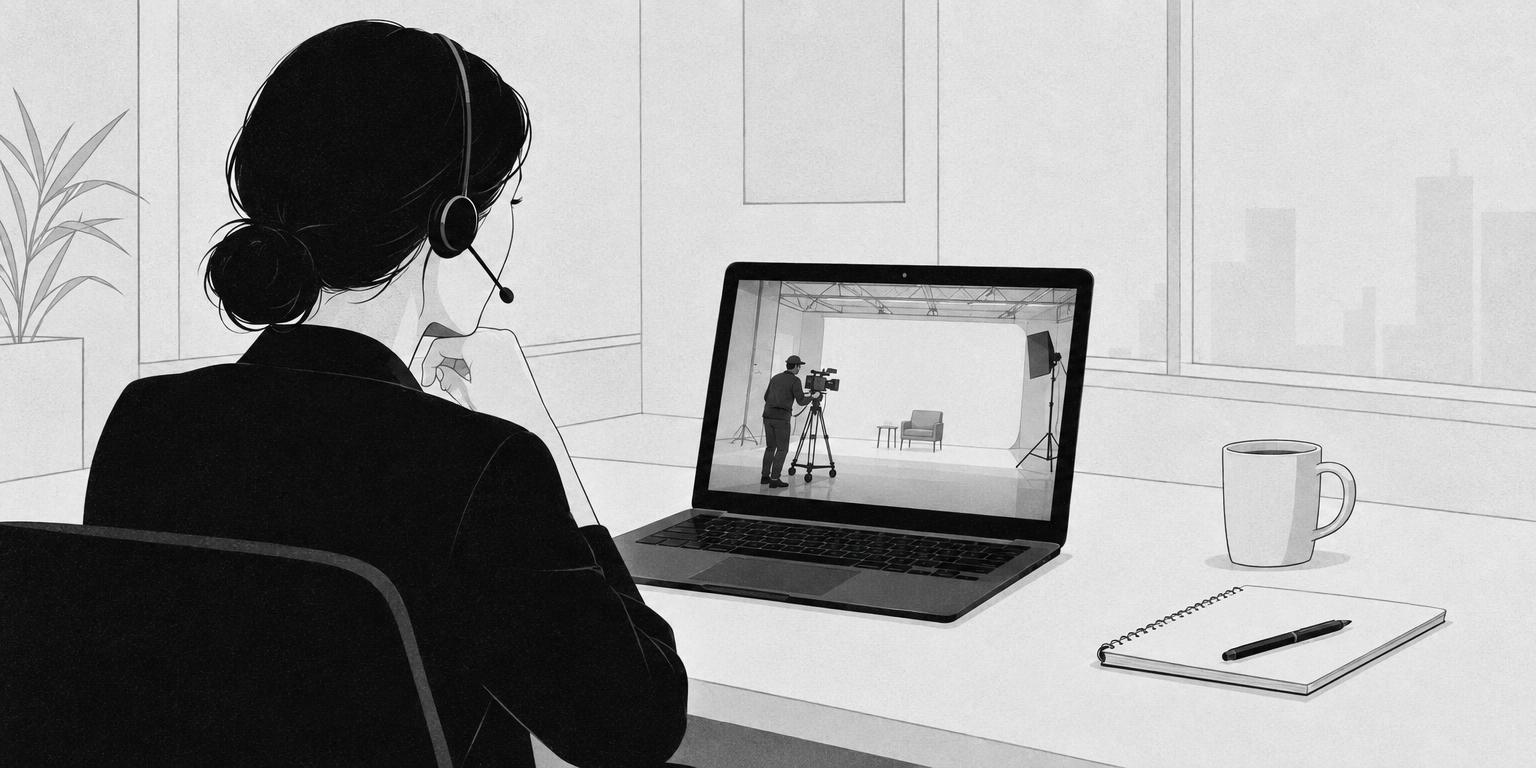
The video village, the monitor tent where clients watch takes, has moved online. Tools like Frame.io's Camera to Cloud upload media during or immediately after capture so editors and stakeholders can review it without waiting for cards to ship.
For brands hiring: you no longer need to fly a team out to approve a shoot. Ask for a live feed and name one person to give notes.
For crews: expect a remote client on most commercial jobs. A reliable feed and a clear notes channel are now part of the job.
Virtual production: useful for specific jobs
LED volumes are established but not universal. Sam Kemp, Virtual Production Supervisor at Garden Studios, told Cinematography World that most high-end TV and feature films now use LED volumes for driving scenes, and that advertising clients were among the first to use virtual production.
For brands hiring: consider a volume when you need controlled car interiors, repeatable environments or locations you cannot travel to. For a talking-head shoot or a product on a table, it is usually more stage than you need.
For crews: experience on an LED stage is a niche skill worth listing, especially for camera and lighting roles. See cinematographer versus videographer for who leads those shoots.
Captions and accessibility as standard
Accessibility rules are tightening. The European Accessibility Act applied from June 28, 2025 and covers services including e-commerce and access to audiovisual media services. Wistia's 2026 report found 90% of teams are already taking steps to make their videos accessible, and captions are the most common place they start.
For brands hiring: list captions, burned-in or as files, as a deliverable in the brief, and check them before publishing.
For crews: clean dialogue audio makes accurate captions possible. Editors should deliver caption files as standard.
How Spexster fits
Read the eight trends together and a pattern falls out: brands need more video than before, in more formats, on the same budget, shot in more places, with a client watching remotely and a growing list of things to get in writing. Every one of those is easier when the crew is local and someone else is holding the paperwork.
That is what Spexster is for. Vetted crews are listed by city (each professional reviewed before appearing, no paid placement), so you post the job where you are shooting and the local videographers apply to you. Or send the brief and a White Glove project manager handles sourcing, briefings, contracts (including AI-use and disclosure terms), scheduling, logistics and escrow payment through Stripe, at no additional fee, with a live remote video village so you direct from your desk. DIVE Billboards used exactly this to source crews across 13 countries and 45+ cities with roughly two-week turnarounds; the DIVE Billboards case study shows how.
Frequently asked questions
What are the biggest video production trends in 2026?
Vertical and short-form deliverables, more videos per budget, creator-style content, local crews, generative AI with new disclosure rules, remote video villages, virtual production for specific scenes, and captions as standard.
Is AI replacing video production crews?
Not for shoots involving real people, products and places. Most marketers use AI somewhere in their workflow, mainly scripting, editing and captions. Realistic synthetic content now carries disclosure duties under the EU AI Act and platform rules like YouTube's, and union contracts require written consent before a performer's digital replica is used.
Do I have to disclose AI-generated content in a video ad?
Often, yes. In the EU, realistic AI-generated or manipulated video that could pass as authentic must be disclosed from August 2, 2026. YouTube requires disclosure of realistic altered or synthetic content. Put responsibility for disclosure in the contract.
Should I shoot vertical and horizontal video on the same day?
Usually, yes, if you need both. Brief every aspect ratio in advance so the crew can frame for both or shoot dedicated vertical setups.
Is it better to hire a local crew or fly one in?
For most shoots of one to three days, local is better: no flights or hotels, knowledge of venues and permits, and a smaller footprint, since travel is the largest source of emissions on measured ad productions.
Sources
- 2026 Marketing Statistics, Trends & Data – HubSpot
- Video Marketing Statistics 2026 – Wyzowl
- State of Video Report: Video Marketing Statistics for 2026 – Wistia
- Neal Mohan at Cannes Lions 2025 – YouTube Blog
- AdGreen Annual Review 2024 (2025 update)
- EU AI Act Guidance Expands AI Disclosure Rules for Advertisers and PR Teams – Davis+Gilbert LLP
- EU AI Act Omnibus Agreement – Gibson Dunn
- EU AI Act Deal: Digital Omnibus Now in Force – Usercentrics
- Disclosing use of altered or synthetic content – YouTube Help
- New SAG-AFTRA Commercials Contract Is Now in Effect – Davis+Gilbert LLP
- C2C: Getting Started with Camera to Cloud – Frame.io Support
- Virtual production in 2026: Did the industry predictions come true? – Cinematography World
- European Accessibility Act – European Commission
- European Accessibility Act 2025: Digital and Video Content – Kaltura